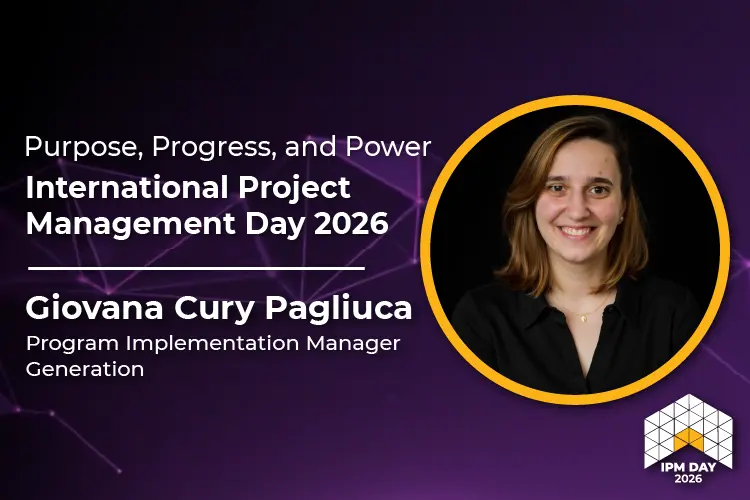
Psychological safety is not the absence of failure; it is a team’s willingness to keep trying. That is the core distinction Giovana Cury Pagliuca, Keynote Presenter, draws in this IPM Day 2026 interview: teams that appear to “never fail” have usually just stopped experimenting, which quietly kills innovation, continuous improvement, and early problem detection.
In this conversation, Giovana answers the questions leaders ask most often about building psychologically safe teams, how to test for it, what mindset shift changes team behavior fastest, the biggest myth holding leaders back, and how real teams turn setbacks into progress. Read on for direct, practical answers you can apply this week.
You said most teams do not fail; they just avoid trying. What is the difference, and why should it matter?
A team that has failed is willing to try something new, test an idea, and learn from the outcome, even when the result is not what they expected. A team that is avoiding trying is also avoiding failure, which means they stop experimenting altogether. Those teams stay with what they know; they follow the status quo in the organization, do not challenge existing processes, and may keep quiet when they have an idea or see a problem, even when they could think of a solution.
If people are afraid of being blamed or judged, they will protect themselves rather than take risks. When teams stop taking risks and experimenting, that’s when you lose the opportunity for innovation, continuous improvement, and even early problem detection.
If a leader wanted to test how psychologically safe their team really is, what's one thing they could look for?
The one thing they could do right now is observe. Observe the team dynamics, especially what happens when someone makes a mistake. Pay attention to their reactions: How does their face look? What do they do? How comfortable are they talking about what happened? How or when do they tell you about the mistake? What is your first reaction when you are told about the mistake?
If someone immediately becomes defensive, looks uncomfortable, tries to hide what happened, or waits until the last possible moment to tell you, that can be a sign that they don’t feel safe.
On the other hand, if someone can openly say, “This didn’t work. Here’s what happened, and here’s what I think we could do differently,” that’s a positive dynamic.
You don’t have to ask your team whether they feel psychologically safe. Observe what happens. Their behavior may tell you more than their answer.
You talk about mindset around failure shaping team behavior. What is a mindset shift you have seen completely transform how a team operates?
One mindset shifts I’ve seen making a huge difference is moving from blame and avoidance to openness and direct communication, especially when experimenting.
Instead of blaming people behind their backs or avoiding difficult conversations, start talking openly about what is happening. Leave as little as possible unsaid, make expectations clear, discuss different outcomes, and create space for people to say when something is not working.
When expectations are clear and people can have honest conversations, things become much easier because everyone understands what was expected, what happened, and what needs to change.
What is the biggest myth about psychological safety that you think holds leaders back from building it?
I think it is that leaders believe they will lose credibility or respect if they show that they are just as human as the people they are leading.
Behind any title, there is always a human being, someone who also feels fear, shame, faces personal issues, and struggles with showing vulnerability. Showing that the human side doesn’t make them a weaker leader. It creates a human connection and more respect.
When a leader is willing to say, “I don’t have all the answers,” “I made a mistake,” or “I’m struggling with this too,” it gives other people permission to be honest about their own challenges too.
Psychological safety doesn’t mean removing the leader’s authority. It means creating enough trust for people to be human while still taking responsibility.
Turning setbacks into progress sounds great in theory. How does that look like in a real project that has gone wrong?
Turning setbacks into progress starts with taking a step back to reflect on when something goes wrong. Ask yourself: When did we take the wrong turn? What happened that made things go wrong? Could we have predicted or prevented it? What could we do differently the next time we try this?
Then, most importantly, do something about what you learned. Take that learning into the next iteration and change the process, test a different approach, or put something in place to prevent the same issue from happening again.
This is where retrospective meetings can make a difference. They create a regular space to look back at what happened, identify opportunities for improvement, propose solutions, and then implement those changes.
In my experience, real value comes from carrying learning into future iterations. That’s how a setback becomes progress: you don’t just recover from what went wrong; you use it to change what happens next.
In summary, psychological safety down to three things:
- Teams that keep experimenting instead of playing it safe.
- Leaders who observe behavior rather than just ask if people feel safe.
- A willingness to be human, not infallible.
As Giovana notes, that combination is what turns a setback into progress instead of just a mistake. Thank you to Giovana Cury Pagliuca for these insights and time spent helping us to learn the value of failing.
See Giovana as a live day Keynote Presenter at IPM Day 2026, going live on November 5, 2026, and available on-demand through February 7, 2027.

Giovana Cury Pagliuca is a project and program management professional with over 10 years of international experience across technology, localization, sustainability, and social impact. She has led global initiatives across China, Ghana, Colombia, and the United States, working with startups, nonprofits, and multinational companies to deliver projects that scale globally while remaining locally relevant.
Giovana holds a graduate degree in Translation, a postgraduate degree in Sustainability & Environmental Studies, and an MBA in International Marketing. She is a PMP®, and the recipient of the PMI Educational Foundation (PMIEF) Kerzner Award for Excellence in 2025.