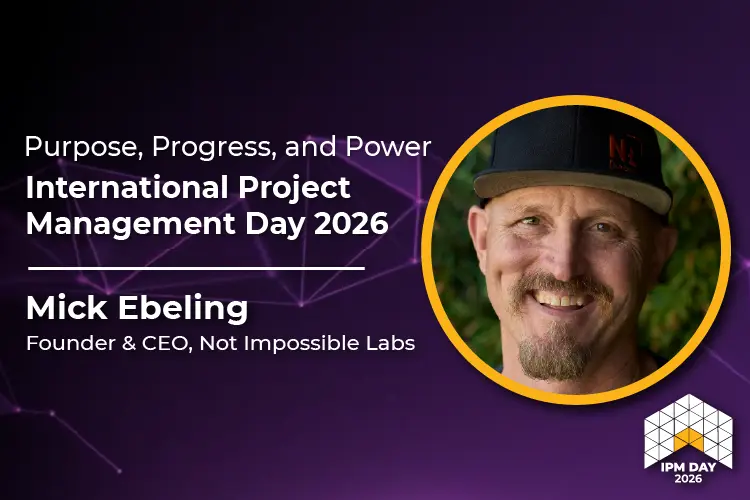
Conversation with Mick Ebeling, Keynote Presenter at IPM Day 2026
September 10, 2026
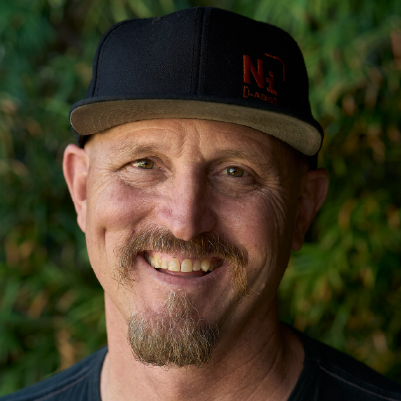
Impossible isn’t a technical limit. It’s a status quo nobody has bothered to question. That’s the reframe Mick Ebeling, Founder & CEO of Not Impossible Labs and Live Day Opening Keynote Presenter at IPM Day 2026, brings. The word “impossible” doesn’t describe reality; it describes a belief system, and once a team accepts it, they stop questioning and start defending.
In this conversation, Mick answers the questions project managers ask most about turning bold commitment into disciplined delivery, how to challenge constraints without blowing up stakeholder trust, and how to recognize when a team has quietly slipped into defending the status quo.
Your philosophy at Not Impossible Labs is "commit, then figure it out". For project managers trained to scope, plan, and de-risk before committing, this sounds like a collision course. How do you reconcile bold commitment with the discipline PMs are responsible for?
I see the words producer and project manager as identical. You’re tasked to accomplish something, whatever it might be. If what you’re supposed to accomplish is worthwhile, because your job is on the line, it’s mission-critical, or someone will benefit, then commit and figure it out is more of a Cortez, burn-the-boats mentality than it is a throwing off of project manager or producer discipline.
When you know you must accomplish something, and there are no other options but to accomplish it, that mentality systematically and cohesively shifts you and the people around you to unify and align toward getting that final project done.
So, it’s not reckless, and it’s not irresponsible. It’s a mindset shift you adopt before you layer in the schedule, the budget, the resources, the time, everything else you need to accomplish that goal. We see it as a supercharger for managing and delivering projects, not a replacement for the discipline.
You've developed a framework to distinguish constraints that are truly fixed and those that go unexamined. How do you help a team challenge constraints they've accepted as gospel while maintaining stakeholder trust?
Some of those constraints are going to be high on the “that’s not going to shift” scale, and some of them remain open to interpretation. Constraints are a wonderful thing. They give you perspective, boundaries, and they compress too much thought or too many ideas down into something workable. Constraints are a focuser. But when a constraint becomes a synonym for abiding by the status quo, it’s no longer positive. It’s no longer a contributing force to the project you’re trying to accomplish.
When we’re working on projects, we look at it this way: someone who has no arms is not going to change. The fact that they’re based in a refugee camp is not going to change either. But the materials we thought we would use to make those prosthetics? Those were open to interpretation. The constraints that fell into the conventional category were ones within which we really couldn’t work. So, we deviated into being open-minded about any material that would accomplish the mission. Constraints are good but knowing when to ignore them is also good.
You have said the word "impossible" can quietly reshape organizational culture, and training teams to question constraints rather than question them. How does a PM recognize when their team has slipped into that mindset?
First, for a second, let us put the word “impossible” to the side. Let us talk about status quos instead.
Status quos are the way you and I go through the world relying on certain things to be a certain way. We rely on people stopping at a stop sign. We rely on the fact that if we go to a restaurant, the food has been prepared cleanly and we are not going to get sick. There are things we do not really think about; they are just how we move through the world.
The problem is, we also adopt a belief system built on status quo, in how the world works, in ways that aren’t necessarily conducive to making change or progressing something in a new way. Organizationally, that shows up as: that is just the way it is. That is just the way it’s always been done. I have been here fifteen, twenty years, and that’s never going to change. People accept the status quo as a given.
But status quo are not given. Think about the status quo a year ago versus right now; the world has changed dramatically. Forget geopolitics; think about how we ingest information. Project managers used to fill up notebooks full of notes. Now we have AI transcription that lets us sit in a meeting and think and participate instead of writing everything down by hand. Status quos are constantly evolving. They’re a measurement of how the world works right now, not how the world will work tomorrow, next week, or next month.
Just adopting the belief that status quo defines this moment but not the future gives us the ability to consider how the world might work if that status quo wasn’t in place. That’s what we call the Not Impossible way: asking is this status quo worth protecting, or do we want to evolve it, push it somewhere else? That’s the foundational step of how we accomplish the impossible, by challenging the reality of the world we’re operating in so we can move it toward change.
What do you hope attendees will think or do differently after watching your Keynote?
- Commit first, then apply planning discipline. Bold commitment aligns a team before the schedule and budget details get layered in.
- Treat constraints as a filter, not a verdict. Some constraints are truly fixed, but many are just unexamined status quo.
- Remember that status quo is a snapshot of right now, not a law of how things must stay.
Mick Ebeling will present The Fallacy of Impossible as the Live Day Opening Keynote at IPM Day 2026, on November 5, 2026. If you can’t join live, the keynote will be available on demand through February 7, 2027.
Mick Ebeling is the Founder and CEO of Not Impossible Labs and the Not Impossible Institute, an inventor, and a leading voice on human-centered, purpose-driven innovation. He shows organizations how to turn seemingly impossible problems into practical solutions.
Mick founded Not Impossible Labs after developing the EyeWriter, a low-cost eye-tracking device that enabled a paralyzed graffiti artist to draw again. Since then, he has led groundbreaking initiatives including Project Daniel, Project Bishop, and Bento, a Medicaid- and Medicare-covered healthcare model serving more than 50,000 patients.
A three-time recipient of both TIME’s Best Inventions and Fast Company’s World Changing Ideas awards, Mick was named one of Fortune’s World’s 50 Greatest Leaders and received the Muhammad Ali Humanitarian of the Year Award. Not Impossible Labs has been named to Fast Company’s 2026 Best Workplaces for Innovators list. He is the author of Not Impossible: Do What Can’t Be Done.