A Conversation with Nicole Petite, PMP, CAPM, PMI-CPMAI, CSM
By Lori, Milhaven, Executive Vice President, IIL
June 18, 2026
Nicole Petite has built a career at the intersection of project management, entrepreneurship, and workforce development—and she has the credentials and real-world experience to back it up. As the founder of a PMI Authorized Training Partner and the creator of the $ix Figure Club, Nicole brings a practitioner’s lens to one of leadership’s most urgent challenges: staying effective when everything around you is in flux.
I sat down with Nicole ahead of her IPM Day 2026 session, Resilient Leadership: Guiding Teams Through Change and Chaos, to get a preview of what we can expect.
Lori: You talk about leaders staying steady during chaos, but what does that look like in practice? Is it about suppressing your own anxiety, or is there something more to it?
Nicole: In practice, staying steady during chaos looks like being organized and prepared. Change and uncertainty are a natural part of any project that involves innovation. Strong leaders help their teams anticipate challenges before they arise, creating the mindset and structure needed to navigate them effectively.
It is not about suppressing anxiety. In my experience, it is about acknowledging and channeling energy productively. When you are in an environment and change is inevitable, you coach your team to expect that change. By building that expectation into the planning process, teams are better prepared to adapt and stay focused.
Lori: Communication is a cornerstone of your framework. When direction keeps changing, how do leaders communicate honestly without eroding team confidence or creating more uncertainty?
Nicole: Actually, simply being transparent stops the team’s confidence from eroding. In my 20-year experience, I have learned that if you are transparent with your team about changes, and they understand already that changes will happen, it minimizes the morale decline.
As a leader, you absolutely must reward the team along the way. Any and every progress or win is something you must celebrate with the team, especially when there is a lot of change and chaos. We are human and we need recognition. You MUST be a leader who inspires, motivates, and rewards progress.
Lori: You address the tension between adaptability and accountability. Where do you see leaders get that balance wrong most often and what is the cost when they do?
Nicole: Leaders often struggle with balancing adaptability and accountability when they view them as competing priorities rather than complementary skills. The key is to coach both. Self-awareness and emotional intelligence help team members take ownership of their work while remaining flexible when circumstances change.
When leaders coach their teams to develop these skills, teams become better at self-correcting, solving problems, and holding themselves accountable, even without constant oversight.
That is what having a balance of adaptability and accountability looks like. Throughout my work, I develop teams who are like well-oiled machines. A leader’s role then shifts from directing every action to supporting the team—removing obstacles, fostering calmness and resilience. Leaders first must know how to coach soft skills, for team members to be more adaptable and accountable in their work.
Lori: Team fatigue and resistance are real obstacles during prolonged disruption. How do you recommend leaders identify early signs and respond in a way that does not feel performative?
Nicole: The best way to identify fatigue and resistance is to involve the team early and often in planning, risk discussions, and decision-making. Team members are closest to the work and are the first to recognize signs of strain and fatigue.
Leaders should create space for honest conversations about capacity, risks and support needs. Practical actions – like building in buffers, cross-training team members, recognizing significant efforts, and taking time to regroup – show genuine care as a leader.
These actions are ways leaders can deter disruption and keep the team going with momentum during a prolonged disruption.
Lori: Your goal is not just to help leaders survive change; it is to help people come out stronger on the other side. What is the single mindset shift you believe makes the biggest difference in getting there?
Nicole: The single biggest mindset shift is making sure the team understands soft skills like self-awareness and emotional intelligence and having psychological safety. Without the team having these traits, as a leader, you will almost have to micromanage and that devalues the team.
Leaders can’t tend to the big picture if we are micromanaging. When we micromanage, either we do not believe the team can get the job done, or you are not ready to be a leader.
Giving your team the psychology safety brings learned experiences and the curiosity to resolve problems that we did not know we had. If we can create safe spaces, and coach teams in self-awareness and emotional intelligence, a leader cannot lose. Over time, trust strengthens resilience, fosters innovation, and helps people emerge from change stronger than when they started.
Lori: Nicole, thank you for this incredible conversation. Your energy, your experience, and your commitment to developing stronger leaders is truly inspiring. We have no doubt that everyone who watches your presentation is going to walk away with something they can use immediately. The IPM Day community is lucky to have you, and we cannot wait to see the impact you make on November 5 and beyond!
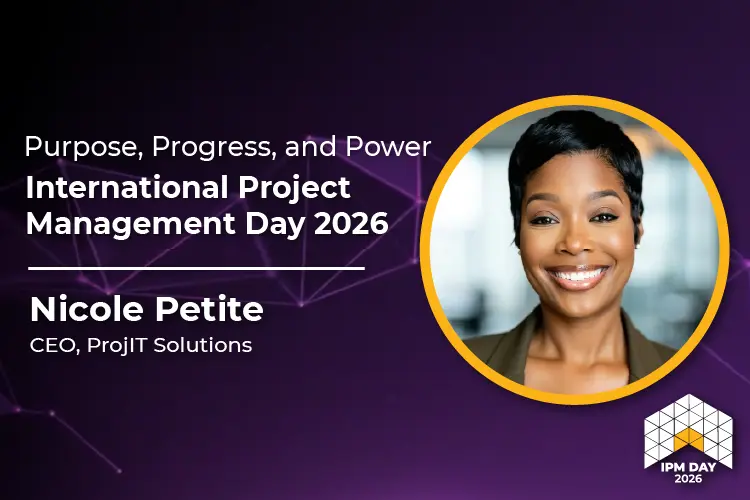
Nicole Petite will be presenting Resilient Leadership: Guiding Teams Through Change and Chaos at International Project Management Day 2026. Live Day is on Thursday, November 5, 2026 and is available for 90 days on-demand. Register now!
Nicole Petite
Nicole Petite is a certified PMP and PMI Authorized Training Partner (ATP) with 8 years of Agile experience. She has led teams using Scrum and Kanban to deliver projects efficiently and adapt to changing requirements. Nicole works with organizations to align Agile practices with business goals, improve team performance, and ensure project success. She is the CEO of ProjIT Solutions, CEO of Nicole Petite Professional Training, and VP of Professional Development for PMI North Alabama. She is passionate about equipping professionals with the tools, training, and mindset to lead with confidence in today’s dynamic project environments.

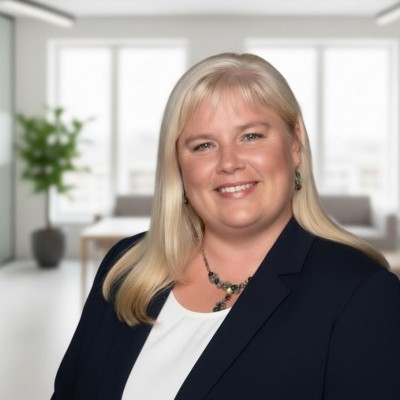
Lori Milhaven
Executive Vice President at International Institute for Learning (IIL)
Our deepest purpose is to enable growth and success of individuals, teams and organizations with long-lasting, high quality learning in a technology-driven world. Lori is honored to have been with IIL over 30 years, and to make it her mission to focus on continuous improvement, client driven success and to go above and beyond to meet expectations.