By Jorgelina Bross-Puglisi
December 10, 2025
Not long ago, my 14-year-old son came home from football practice with an interesting story. The team hadn’t played well, and the coach made everyone do several rounds of intense push-ups and ab drills. As a parent (and a project manager at heart), I instinctively thought, “Punishing low performance? Really?”
But then my son clarified: the push-ups weren’t for losing. They were not playing as a team; too much solo dribbling, not enough passing, not enough collaboration. Suddenly, the picture shifted: this wasn’t about punishment, but about reinforcing a core principle: everyone plays, everyone contributes, everyone grows.
Of course, we can debate the method, but the intent is spot-on. Teams work only when everyone has the conditions to learn, improve, and shine, not when the two star players take over to guarantee a win.
And that, believe it or not, is exactly where psychological safety steps onto the field in project work.
Psychological Safety: The “Team Sport” of Project Management
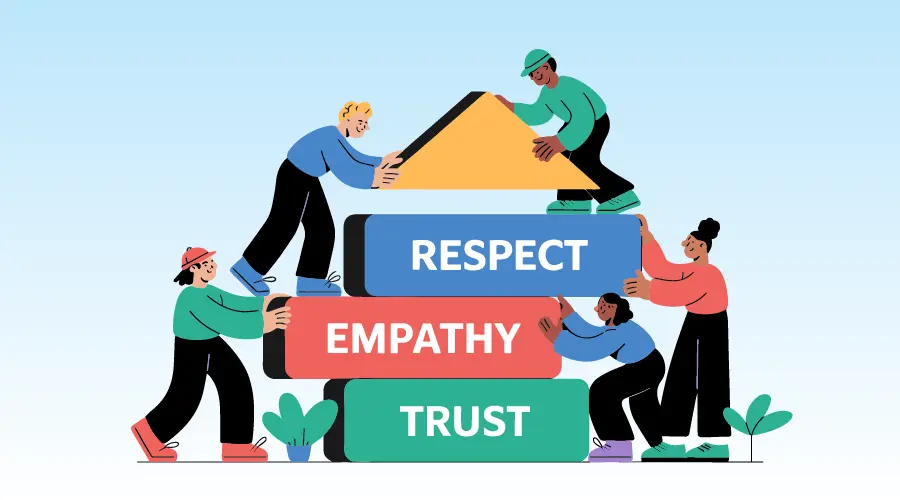
Psychological safety is essentially the freedom to speak up, admit mistakes, float bold ideas, and challenge the status quo without fear of being embarrassed, punished, or quietly sidelined.
It sounds wonderfully idealistic. But does it really work for any team that decides they want it? Yes, it works.
But like football, it isn’t automatic. And it definitely isn’t about being endlessly “nice.”
It’s more like disciplined training; intentional, consistent, and built on a structure that the Project Manager must champion. Psychological safety creates the conditions for risk-taking, continuous learning, and honest communication. It shifts the focus from “I must not fail” to “We’re better when we learn and improve together.”
Does the Research Back It Up? Absolutely.
Google’s Project Aristotle
Psychological safety was identified as the #1 factor separating high-performing teams from the rest. Impact: Higher productivity, more innovation, and lower turnover.
Harvard Business Review
Gallup
When employees feel their opinions matter, organizations see 40% fewer safety incidents and 27% lower turnover. Impact: Better retention, better performance, fewer disasters.
The science is clear: psychological safety isn’t soft. It’s strategic.
How the Project Manager Sets the Tone
Do This:
- Set Clear Norms. Discuss how the team handles conflict, feedback, and Explicitly add a No Blame Policy to the team charter.
- Admit Your Own Mistakes. Model the vulnerability you expect. “I miscalculated the budget by overlooking X. Here’s what I learned.”
- Thank the Messenger. When someone brings bad news, start with gratitude, always. “Thank you for raising this early. We can fix it.”
- Challenge Ideas, Not People.. Swap “Why did you do it this way?” for “What was the thinking behind this approach? Let’s explore other options.” Simple shifts. Huge impact.
Definitely Don’t Do This:
- Shoot the Messenger. Negative reactions to bad news teach people to stay silent, and silence kills projects.
- Public Humiliation. It might produce compliance, but it crushes creativity.
- Ignore Feedback. Asking for input but never acting on it breeds cynicism. Fast.
- Celebrate Only Success, Punish Every Failure. This creates a culture where no one takes risks, and innovation evaporates.
So… Is Psychological Safety Worth It?
Absolutely. And it’s easier to sustain than most people think, if everyone plays their part.
When I asked my son how he felt about the whole team doing push-ups because a few didn’t pass the ball, he just shrugged and said: “It’s fine. It works. We play as a team afterwards.”
Turns out, he’s onto something.
Key Takeaways:
- If your project team isn’t collaborating, sharing openly, or learning together… maybe it’s time for some metaphorical push-ups.
- Not to punish. But to remind everyone: we win only when we play as a team.
Want to learn more? View IIL's related courses:
Trainer & Consultant
International Institute for Learning (IIL)
Jorgelina is an accomplished industrial engineer, project manager, and consultant with solid international experience in various industries. She has conducted numerous projects in more than 15 countries in Latin and North America, Europe, and Asia. She is a results-oriented leader, with excellent communication and facilitation skills.