By Natalie Berkiw-Scenna, PMP
June 4, 2026
Last week, I had the opportunity to present a webinar to the International Institute for Learning (IIL) community called Under Pressure: Managing Stress Without Losing Performance.
As I prepared for the session, one thought kept coming back to me:
Many of us have accepted stress as a normal part of project leadership.
In fact, we often wear it as a badge of honor.
We pride ourselves on being responsive. Available. Reliable. Able to juggle competing priorities, manage difficult stakeholders, resolve conflicts, and keep projects moving forward no matter what.
But somewhere along the way, many project managers started believing that constant pressure is simply the cost of high performance.
I don’t believe that’s true.
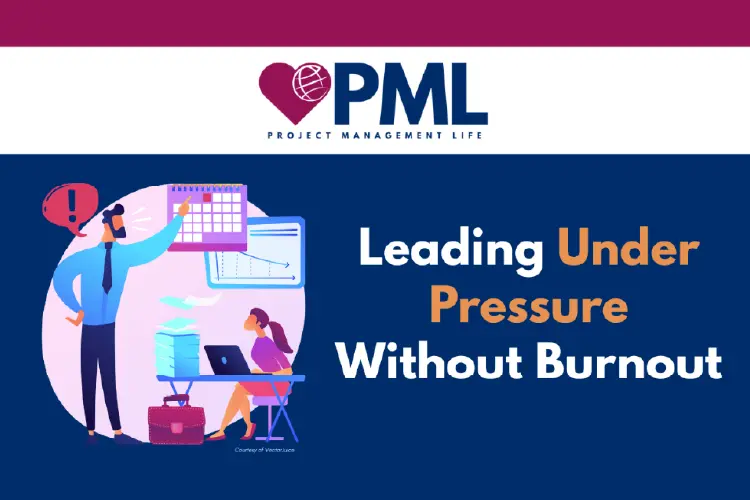
Project managers operate in one of the most cognitively demanding roles in the workplace.
We’re constantly shifting between projects, meetings, emails, chats, reports, risks, issues, stakeholder concerns, team challenges, and organizational priorities.
We sit at the center of everything while often having limited authority over the resources and decisions needed to move work forward.
At any given moment, we’re balancing:
- High cognitive load – many things on our mind and requiring our attention
- High operational pressure – many things happening at once and operating in reactive mode
- High emotional labor – many stakeholders, difficult conversations, collaboration, and conflict resolution
And we’re expected to do it all while remaining calm, professional, and productive.
It’s no wonder so many us project leaders feel exhausted.
Stress Is Often a System Response
One of the key messages I shared during the webinar is stress is not a personal failure. It’s often a system response to cognitive overload.
When we experience stress, our first instinct is usually to ask, “What’s wrong with me?”
But a better question might be, “What’s creating the overload?”
Many project managers are trying to operate within systems that create constant interruptions, fragmented attention, unclear expectations, and ongoing urgency.
The result isn’t just feeling stressed.
The result is reduced focus, poorer decisions, reactive communication, and increased mistakes.
In other words, stress doesn’t just affect how we feel. It affects how we perform.
The Hidden Cost of Context Switching
One of the biggest contributors to modern workplace stress is context switching.
Every time we jump from a meeting to an email, from a stakeholder issue to a status report, or from one project to another, our brains must stop, reorient, and reload information.
These transitions may seem small, but they come with a cost.
Over time, constant context switching fragments our attention, increases our mental fatigue, and makes it harder to perform deep, focused work.
Many project managers don’t have a workload problem. They have an interruption problem.
Four Areas Worth Paying Attention To
When people think about stress management, they often focus only on self-care.
While self-care definitely matters, it’s only one piece of the puzzle.
Through my work with project managers, and from my own 25 years of project management experience, I’ve found that reducing stress and improving performance often comes down to four key areas:
1. Manage Your Cognitive Load
Your brain was never designed to hold everything at once.
Yet many project managers spend their days trying to mentally track action items, stakeholder requests, upcoming deadlines, risks, unresolved issues, and dozens of small reminders. Eventually, that mental load becomes overwhelming.
One of the simplest ways to reduce stress is to stop relying on your memory as your primary system.
Capture tasks and commitments as soon as they arise. Create a trusted place to store ideas, reminders, and follow-ups. Protect blocks of focused work time whenever possible and reduce unnecessary context switching.
Even small changes can make a significant difference. A 30-minute uninterrupted focus block can often accomplish more than two hours of fragmented work spread throughout the day.
The goal isn’t to do more. It’s to reduce the amount of information your brain has to continuously carry.
2. Manage Your Work Systems
Many sources of workplace stress are system problems disguised as people problems.
When expectations are unclear, communication is inconsistent, or priorities constantly shift, project leaders are forced to spend valuable energy filling in the gaps.
Strong work systems create clarity and reduce unnecessary pressure.
This can be as simple as establishing regular team cadences, creating consistent reporting processes, clarifying roles and responsibilities, or defining what “done” actually looks like.
Systems also help reduce decision fatigue. Every template, checklist, standard process, or automation removes a decision that would otherwise require your attention.
When your work environment becomes more predictable, your brain spends less time managing uncertainty and more time focusing on meaningful work.
3. Manage Your Energy
Most productivity advice focuses on managing time. I believe managing energy is often more important.
Not all hours of the day are equal. We each have periods when we’re more focused, creative, strategic, or emotionally resilient.
Understanding your own energy patterns allows you to align the right work with the right time.
Schedule your most cognitively demanding work during your peak energy periods. Save administrative tasks for lower-energy windows. Build small recovery moments into your day instead of waiting until you’re completely exhausted.
Sometimes a short walk, a few minutes away from a screen, a conversation with a colleague, or simply stepping outside for fresh air and sunshine can provide the reset your brain needs.
Sustainable performance isn’t about maintaining maximum output all day long. It’s about learning how to pace yourself so you can perform consistently over the long term.
4. Manage Your Internal Response
While we can’t always control the demands placed upon us, we can influence how we respond to them.
This is where emotional intelligence and self-leadership become essential.
In high-pressure environments, our default reaction is often to respond immediately. We answer the email, react to the request, jump into problem-solving mode, or absorb someone else’s urgency as our own.
But not everything requires an instant response.
Creating even a brief pause before reacting can dramatically improve decision-making and communication.
When you feel pressure rising, ask yourself:
- What actually matters here?
- What outcome am I trying to achieve?
- Is this truly urgent, or does it simply feel urgent?
These small moments of reflection help shift us from reactive leadership to intentional leadership.
Over time, they strengthen our ability to remain calm, focused, and effective even when circumstances around us are anything but.
Moving Beyond Stress Management
The more I study performance, burnout, and workplace well-being, the more convinced I become that stress management alone isn’t enough.
We need to start talking about sustainable performance.
Sustainable performance is the ability to consistently deliver high-quality results without sacrificing your health, energy, relationships, or long-term well-being in the process.
It’s the difference between sprinting endlessly and building the capacity to perform well for years.
For too long, high performance has been associated with constant availability, saying yes to everything, and pushing through exhaustion.
But those approaches eventually break down.
The most effective project leaders I know are not the ones who push the hardest. They’re the ones who have learned to lead sustainably.
A Final Question for You
As you think about your own work this week, consider this: What is creating the most pressure in your work right now?
Is it workload? Or is it the way the work is showing up? Sometimes the answer reveals an opportunity to make a small shift that creates a significant improvement in both performance and well-being.
And often, those small shifts are where sustainable performance begins.
You got this, project manager!
Natalie Berkiw-Scenna will be presenting Sustainable Performance for Project Leaders: Driving Results Without Burnout at International Project Management Day 2026! The event goes live on Thursday, November 5, 2026 and is available for 90 days on-demand. Register now and secure your seat for this impactful event!
About Project Management Life (PML)
Project Management Life (PML) is a growing community focused on helping project leaders build sustainable performance through community, content, virtual retreats, courses, and transformational learning experiences.
We share exclusive content around project management, career and personal branding, health and well-being, self-care, sustainable performance, and so much more. PML offers a space to connect, recharge, and discover new ways to thrive through retreats, online events, and corporate training programs.
Visit the PML Website to learn more about us: https://projectmanagementlife.org
Founding Lead, Project Management Life (PML)
Natalie Berkiw-Scenna, PMP is the founder behind Project Management Life (PML).
With 25 years of project management experience, Natalie Berkiw-Scenna brings her passion and guidance to support other project managers to grow their careers through mentorship, coaching and education.
Connect with Natalie Berkiw-Scenna, PMP, Founder of PML on LinkedIn at: https://www.linkedin.com/in/natalieberkiwscenna/