By Natalie Berkiw-Scenna, PMP
Founder, Project Management Life (PML)
April 9, 2026
For decades, project management culture has celebrated one thing above all else: endurance.
We have all experienced long hours, tight deadlines, constant urgency, and the need to “push through” when things get difficult.
Many of us project managers have built successful careers operating this way. We solve problems quickly, keep our teams moving forward, and deliver results under high pressure.
But there is a hidden cost. And we often suffer silently.
Over time, constant urgency and intensity begin to erode the very capabilities that make great project leaders effective. Our focus becomes fragmented. Our energy declines. Our capacity shrinks. And boundaries blur until work begins to crowd out the rest of our life or at least bleed well into it.
Project leaders today are expected to deliver faster, manage increasing complexity, and maintain engagement across multiple project teams and various stakeholder groups with vastly different needs. The result isn’t just fatigue. It’s cognitive overload and burnout.
Many of us experience unsustainable performance. We feel stressed, overwhelmed, and low energy. We’re in constant reactive mode. Firefighting becomes the norm. And ultimately, we sacrifice our own health and well-being.
At Project Management Life (PML), we believe the future of project leadership requires a different model: one that supports our ability to deliver consistent, high-quality results without burning ourselves out in the process.
This idea is the foundation of what we call The Sustainable Performance Framework™ for Project Leaders.
What Is Sustainable Performance?
Sustainable performance is not about working less or reducing expectations. It’s about leading in a way that maintains clarity, resilience, and execution over time. This is not considered for just a single deadline, but over an entire, fulfilling project management career.
This is about working in a way that protects and amplifies the resources that make great leadership possible.
When we’re working in this sustainable performance mode, we understand our highest priorities, we schedule the most challenging tasks during our peak energy times of the day, we build in time for recovery after intense delivery, trade-offs are openly discussed, and we build in time for deep work, self-care, administrative tasks, and more. We have the mental clarity to solve problems and think under pressure.
To help project leaders achieve this, we’ve been developing a framework built around four critical elements that shape performance over time.
The Four Foundations of Sustainable Performance
While project management methodologies tend to focus on scope, schedule, and deliverables, sustainable leadership requires our attention to something deeper.
Performance is influenced by the human systems behind the work.
Within the Sustainable Performance Framework™ for Project Leaders, four elements play a particularly important role.
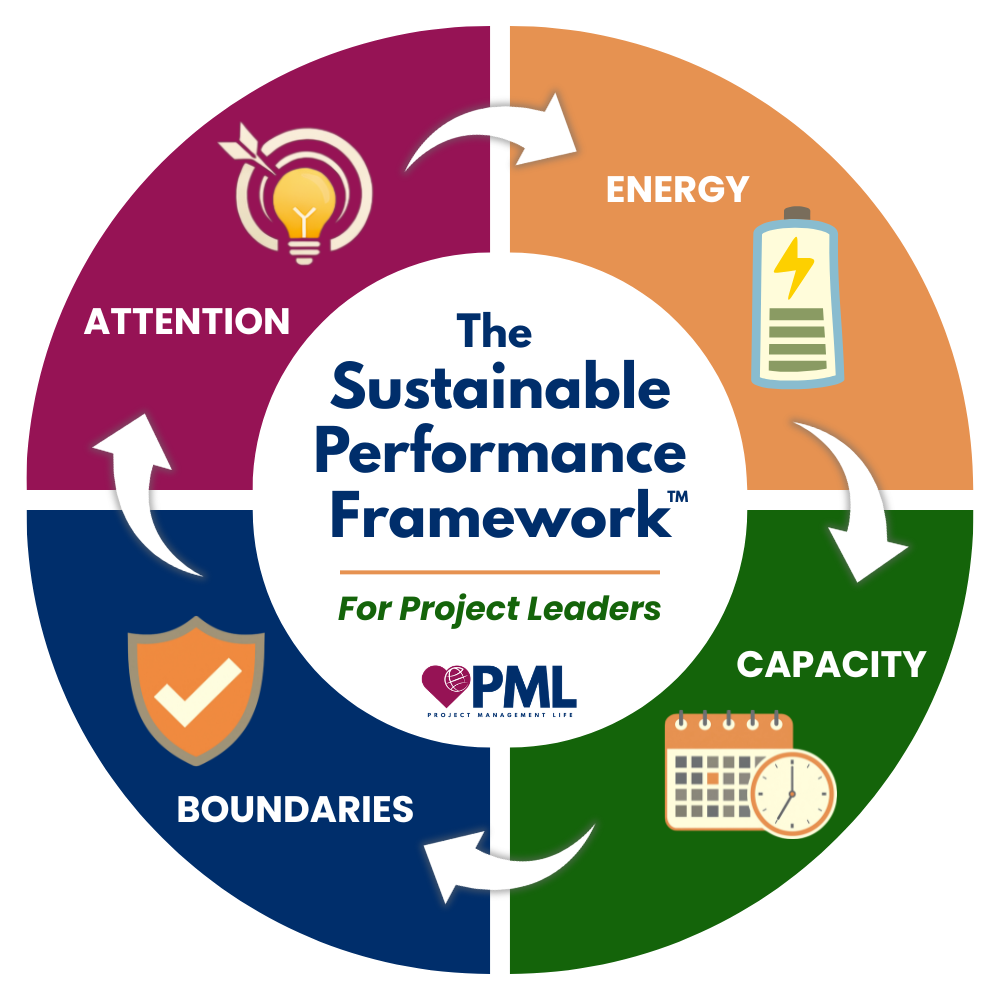
Attention
In a world of constant notifications, shifting priorities, and back-to-back meetings, attention has become one of our most valuable leadership resources.
As project leaders, we’re often asked to manage dozens of moving parts simultaneously. Yet the ability to focus deeply on the right problems at the right time is what ultimately drives progress.
Sustainable performance requires protecting our attention so it can be directed intentionally rather than constantly fragmented.
Energy
Project leadership is not just intellectually demanding. It’s emotionally and psychologically demanding as well.
We absorb pressure from stakeholders, guide our teams through uncertainty, and make decisions in environments where information is often incomplete and constantly changing.
Over time, this type of work draws significantly on our personal energy levels.
Sustainable performance depends on understanding our energy and how it’s generated, restored, and spent across the course of demanding projects. This also explores identifying predictable rhythms in our energy levels and aligning the right work at the right time.
Capacity
Many project managers operate at or near full capacity for extended periods of time. Everything feels urgent, and there is little to no time left to pause and think strategically.
Eventually, everything starts to feel strained. Our ability to make effective decisions slows down. Our creativity declines. And even small issues begin to feel overwhelming and sometimes insurmountable.
Sustainable performance involves learning how to manage our workload, complexity, and expectations in ways that keep us operating at a healthy level of capacity. It’s about intentional capacity-based planning and assessing how we effectively utilize our limited time.
Boundaries
Perhaps the most overlooked element of our performance is setting healthy boundaries.
Without them, our workload would endlessly expand into our evenings, weekends, and personal time if we allowed it.
Strong boundaries are not about saying “no” to work. They are about creating the conditions that allow us to show up fully present and effective when it matters most. Boundaries provide clear agreements about time, availability, scope, and responsibility that protects sustainable performance.
When boundaries are clear, our focus improves, recovery after intense periods becomes possible, and our performance is far more sustainable and effective.
Why This Matters for the Future of Project Leadership
Project management is constantly evolving. The expectations of project leaders continue to grow. In many cases, we have now transitioned into strategic business partners, and we bring immense value to both our projects and our key stakeholders.
Today’s project leaders are expected to guide complex initiatives, manage cross-functional teams, navigate uncertainty, and communicate clearly to various groups with vastly different needs.
That level of responsibility requires more than technical skills.
It requires the ability to sustain clarity, resilience, and focus over the long term.
Here at PML, we believe sustainable performance will become one of the defining leadership capabilities for project professionals in the years ahead. And we’re excited to take a leading role in exploring this topic more deeply with our community.
About Project Management Life (PML)
Project Management Life (PML) is a growing community focused on helping project leaders build sustainable performance through community, content, virtual retreats, courses, and transformational learning experiences.
We share exclusive content around project management, career and personal branding, health and well-being, self-care, and so much more. PML offers a space to connect, recharge, and discover new ways to live your best life.
Join PML for a free webinar on May 1st, 2026 to learn more about Sustainable Performance.
Visit the PML Website to learn more about us: https://projectmanagementlife.org
Connect with Natalie Berkiw-Scenna, PMP, Founder of PML on LinkedIn at: https://www.linkedin.com/in/natalieberkiwscenna/
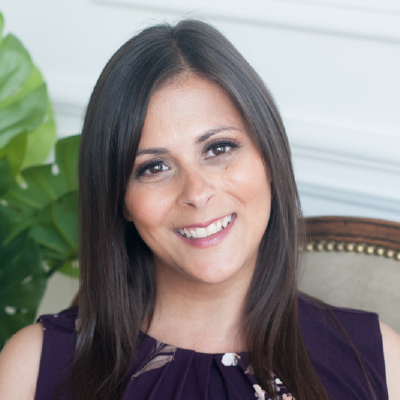
Natalie Berkiw-Scenna
Founding Lead, Project Management Life (PML)
Natalie Berkiw-Scenna, PMP is the founding lead behind Project Management Life (PML) – an inspiring online community of passionate project managers and dedicated volunteers. PML is committed to celebrating the profession of project management and actively sharing knowledge, wisdom, and practical insights on how project managers can thrive and live their best life.
With well over 20 exciting years of project management experience, Natalie Berkiw-Scenna brings her passion and guidance to support other project managers to grow their careers through mentorship, coaching and education.
She brings her wealth of knowledge and expertise from her PMP and Lean designations, and years of leading complex, strategic projects. Her book, Unleash Your Meeting Potential™, can be found in retailers around the world. She also launched this material as an online course after teaching this valuable content to several MBA programs and at various educational events and symposiums including IIL’s 2021 International Project Management Day.
Natalie has international project experience in both Canada and the United States, and has worked primarily in the healthcare and non-profit sectors. She currently provides her expertise to Beaumont Health in Michigan. In her spare time, she focuses on training and coaching others to build their confidence and credibility to take their careers to the next level.
You can connect with Natalie through the following:
Website: www.NatalieScenna.com/learn
LinkedIn: https://www.linkedin.com/in/natalieberkiwscenna/
Email: NatalieScenna@gmail.com