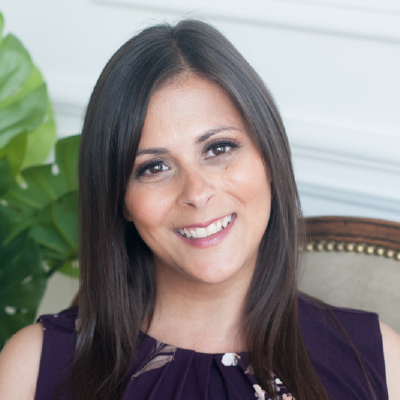
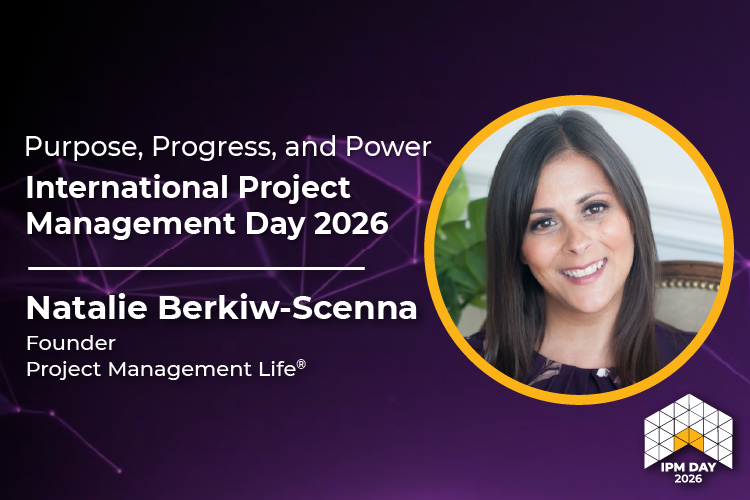
IPM Day Speaker Spotlight: Natalie Berkiw-Scenna
Every project leader knows the feeling: the inbox that never empties, the meeting that runs into the next. Most of us call it being busy. But there is a line between busy and burned out, and most leaders do not see it until they have already crossed it.
Natalie Berkiw-Scenna, PMP, Founder of Project Management Life®, has lived through burnout herself and built a framework to help others spot the warning signs sooner. Ahead of her IPM Day 2026 session, “Sustainable Performance for Project Leaders: Driving Results Without Burnout,” Lori Milhaven, EVP at IIL, sat down with Natalie to learn about her passion and purpose, and to talk protected focus, boundary-setting, and the one habit most people are too afraid to try.
Lori: What is the difference between busy and burning out, and how do most project leaders miss the warning signs?
Natalie: Being busy typically is not an issue. Project managers and leaders will always experience periods of high demand, whether it is during a project launch, a tight deadline, a challenge that is being escalated, or weeks when our workload becomes heavier than usual. Busy, high-intensity periods that are time-limited or seasonal are sustainable.
The problem is when high demand becomes a normal and permanent operating model. Constant high-intensity and feeling like you are in continuous crisis mode is unsustainable and can lead to burnout over time.
Burnout often sneaks up slowly and quietly. We may notice that our patience becomes shorter, our ability to concentrate declines, we stop taking breaks because there never seems to be a good time, and we finish each day exhausted yet feeling like we never get enough done.
As project leaders, we are particularly vulnerable because being dependable and reliable is something we often strive for. We are used to jumping in, solving problems, and keeping things moving. But when this becomes constant, it can hide the fact that our capacity is being depleted.
Lori: You talk about 'protected focus' as a core skill. What does that look like on a day packed with meetings and fire drills?
Natalie: Protected focus does not mean we need to unrealistically find three uninterrupted hours in our day when we have multiple meetings and priorities. Instead, it means becoming more intentional about where our attention goes.
One of the biggest threats to our performance today is constant context-switching. We move from a status meeting to a Teams message, to an email, to an escalation, to another meeting, and so on. Then we wonder why the work that requires our focused, deep thinking gets pushed to the end of the day, when our brains are already too overloaded to be productive.
Protecting our focus might mean blocking a 30-minute window to work on your highest priority of the day and treating that time no differently than if you were in a meeting. If you would not take a phone call in the middle of a meeting, then give the same respect to this window.
It might mean turning off notifications when you are pulling together a stakeholder presentation or grouping all your administrative work for later in the afternoon and not checking email continuously throughout the day.
This might also mean recognizing that someone else’s sudden urgency does not automatically have to become your immediate priority.
Your goal is not to eliminate interruptions. It is to stop allowing interruptions to completely take over your day.
Lori: Can you share one boundary-setting habit you see top-performing project managers use that most people are too afraid to try?
Natalie: One of the most effective habits I see in top-performing project leaders is simply making trade-offs visible.
Here is the reality… we are always being asked to do more. Because we tend to want to please people and keep stakeholders happy, we may say yes as a default without taking a moment to think about our capacity. We have often been conditioned to absorb more work instead of acknowledging a capacity problem.
Top-performing project managers will pause before saying yes and say something like:
- “If we prioritize A, then B will need to move to next week.”
- “Here is what our current capacity supports. Anything beyond this requires a trade-off.”
- “If we prioritize this, what will we shift?”
We need to remember that our capacity is not unlimited. Effective boundaries are not about being difficult or unwilling to help. They simply create clarity around what we can realistically accomplish with the time, people, and resources available to us.
Lori: If someone is already feeling overwhelmed, what should they address first: energy, capacity, focus, or boundaries?
Natalie: I would always start with focus.
When we feel overwhelmed, everything can start feeling equally important and urgent. Emails, Teams messages, meetings, notifications, requests, and other people’s priorities all start competing for our attention at the same time. This only increases our sense of overwhelm.
Before you try to work “harder” or completely redesign your workload, the first thing I would do is try to reduce some of that unnecessary noise. Remember this, if everything is a priority, then nothing is a priority.
I would invite everyone to ask themselves, “What is actually requiring your attention right now, and what is simply distracting you?”
This might mean turning off the notifications for your emails, chat messages, and other notifications for 30 minutes, closing unnecessary tabs so you only have what you need open, or postponing something that does not truly need your immediate attention.
Focusing helps you create enough mental space to see your situation more clearly. Once you reduce the noise, you can better assess your energy, understand your true capacity, and recognize where stronger boundaries may be needed.
This is why we will cover Focus and Attention first in the Sustainable Performance Framework for Project Leaders during my upcoming session at International Project Management Day 2026.
Lori: Can you share an example of a leader who turned their performance around without just working harder?
Natalie: I have personally lived through burnout. I remember a time when I was the most senior PM in my project management office, and every complex problem or urgent fire made its way to me. My workload was unmanageable; I worked until 10 to 11 pm every night; I was exhausted and overwhelmed.
But I was great at hiding it and would immediately say yes whenever the next priority crossed my desk. I felt needed and I did not want to let anyone down. Then I reached a breaking point.
As I reflect on that time, I wish I had considered a more sustainable way of working before I allowed it to go that far.
Today, I manage my work completely differently. I turn off notifications when a priority task requires my full attention. I speak up when my plate is full. I manage my day based on my energy and use my greatest mental clarity to tackle deep work and leave administrative tasks when my energy dips. I set healthy boundaries in my personal and professional life.
There are many things we can do as project managers to consistently deliver great results, while working sustainably and minimizing our risk of burnout. That is the essence of my session, Sustainable Performance for Project Leaders: Driving Results Without Burnout, at IPM Day. I will be providing practical strategies around protected focus, intentional energy management, realistic capacity planning, and professional boundaries. These are strategies you can apply right away, and I cannot wait to share them with you!
Natalie Berkiw-Scenna’s message is clear: sustainable performance is about being intentional with focus, energy, and boundaries, and you can learn it through her Sustainable Performance Framework.
Watch Natalie’s On-Demand Presentation, Sustainable Performance for Project Leaders: Driving Results Without Burnout, at International Project Management Day 2026. Register today!
About Natalie Berkiw-Scenna
Natalie Berkiw-Scenna, PMP, is the Founder of Project Management Life® (PML), a community and platform dedicated to helping project professionals lead, perform, and live their best life. With a passion for redefining what high performance looks like in today’s demanding work environments, Natalie brings a human-centered perspective to modern project leadership that values both results and well-being.
Drawing from her 25 years of experience leading complex projects and working with diverse teams, Natalie focuses on helping project professionals navigate pressure, complexity, and constant change with greater clarity and resilience. Her work empowers leaders to move beyond reactive ways of working and toward more intentional, sustainable approaches to performance.
Through Project Management Life®, Natalie supports a global community of project professionals committed to growth, balance, and long-term success. She also led the development and publication of THRIVE™ Magazine, PML’s new digital publication featuring perspectives on project leadership, career growth, well-being, sustainable performance, and the experiences shaping today’s project professionals.
Natalie has international project experience in both Canada and the United States and has worked primarily in the healthcare sector. She continues to manage corporate, strategic projects within the largest healthcare system in Michigan, U.S. From this experience, she brings the lens of health, well-being, and self-care to the project management community.
Learn more at https://projectmanagementlife.org
Questions? Email info@projectmanagementlife.org
Read THRIVE™: https://projectmanagementlife.org/thrive/
Connect with Natalie: https://www.linkedin.com/in/natalieberkiwscenna/