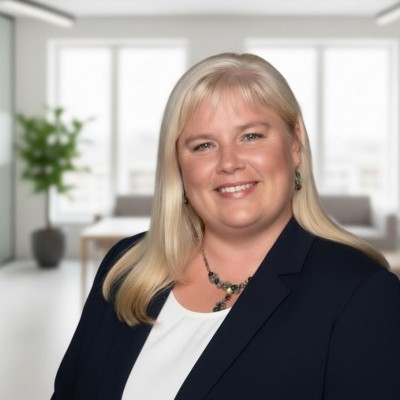
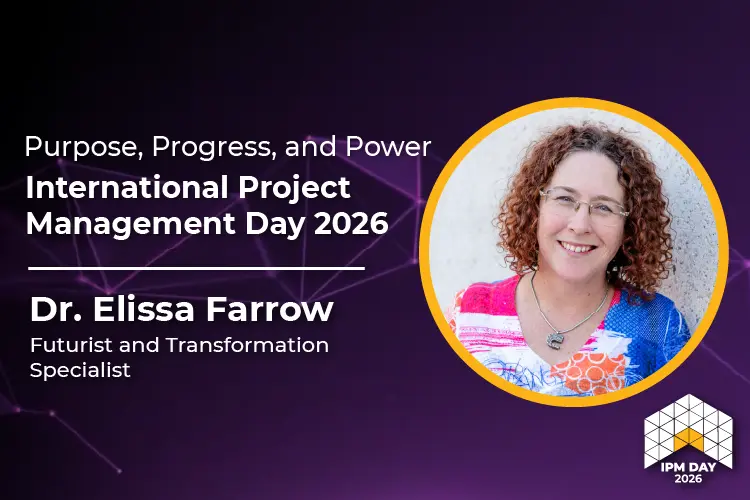
Lori Milhaven, Executive Vice President at IIL sits down with Dr. Elissa Farrow to discuss how followership, co-design, AI and inclusive leadership are reshaping the future of work.
June 30, 2026
Some of the most important shifts in how we work don’t come from new tools or new titles. They come from new ways of seeing. Dr. Elissa Farrow has spent her career doing exactly that, challenging the assumptions we carry into projects, teams, and organizations, and replacing them with something more honest, more inclusive, and ultimately more effective.
I sat down with Elissa ahead of her keynote at IPM Day 2026 to talk about followership, co-design, AI, and what it really means to lead from every seat.
Lori: You frame followership as an “active, generative force”. That’s a provocative reframe for project managers who are used to thinking in terms of leadership hierarchies. What’s the moment that shifted your own thinking on this?
Elissa: My thinking shifted during a project where the most meaningful breakthrough didn’t come from the steering committee, the sponsor, or the senior technical leads. It came from someone who wasn’t even formally on the project team. A frontline social worker who had been quietly observing the ripple effects of our decisions. They offered a reframing that immediately dissolved months of circular debate.
That moment stayed with me because it showed something profound: influence comes from insight, not hierarchy. From then on, the traditional leadership-followership binary felt too narrow to describe how complex work really gets done.
Followership, in that moment, wasn’t passive. It was sense‑making, pattern recognition, and courageous contribution. It was generative. It shaped the direction of the project as much as any formal leader did.
Since then, I’ve come to see followership as a dynamic role that moves, expands, contracts, and adapts. It’s a relational force. One that invites us to pay attention to where wisdom is emerging, not just where authority is located.
If anything, that moment taught me that distributed influence is already happening all around us. We just need to learn to notice it.
Lori: Co-design sounds ideal in theory, but project timelines are tight and stakeholder input can sometimes slow things down. How do you respond to project managers who see co-design as a nice-to-have rather than a delivery accelerator?
Elissa: When project managers express concern about co‑design slowing things down, I can empathise, because project environments are typically pressured, and delivery expectations are high. But what I’ve seen repeatedly is that lived‑experience participation changes the quality of decisions, not just the quantity of inputs if the practice is built into the delivery approach from the very beginning. Lived experiences mean the first-hand knowledge, insights and understanding that we each gain through our own experiences.
People with lived experience bring contextual intelligence that no requirements document can fully capture. They illuminate constraints, cultural nuances, and unintended consequences early enough that teams can adapt before those issues become embedded or encoded. That’s not about speed; it’s about avoiding misalignment, rework, and stakeholder fatigue.
More importantly, co‑design builds relational trust. Trust to me is at the heart of delivery. When people feel seen and heard, they become partners in the work rather than observers of it. That shifts the emotional climate of a project, and projects with healthier climates tend to move with more clarity and less friction.
So, when project managers ask whether co‑design is essential, my response is that it’s not an add‑on. It’s a way of ensuring that the project is grounded in reality, not assumptions. It’s a way of honouring the people most affected by the work. And it’s a way of creating outcomes that are more durable because they are co‑owned.
Co‑design isn’t about speed. It’s about shared stewardship and that’s what ultimately sustains great delivery and awesome project teams.
Lori: You talk about influence flowing in multiple directions. In your experience, what’s the biggest barrier preventing project teams from recognizing and embracing that influence? Is it organizational structure, workplace culture, or something else?
Elissa: The most significant barrier is cultural. Even in organisations with modern structures, agile rituals, and collaborative tools, many people still carry an internalised script that says leadership flows downward and influence is earned through hierarchy.
This cultural inheritance shapes how people speak up, how they listen, and how they interpret their own legitimacy. It also shapes how leaders respond to challenge or dissent. When influence is imagined as a scarce resource, people protect it. When it’s imagined as a shared resource, people contribute to it.
Another barrier is identity. Many professionals have built their sense of competence around being the expert, the decision‑maker, or the person who “owns” the answer. Multi‑directional influence asks us to loosen that identity and make space for others to lead in moments where their insight is stronger. That can feel destabilising if the culture or personal mindset doesn’t support it.
Finally, there’s the barrier of pace. Fast‑moving environments can unintentionally reward decisiveness over reflection. Multi‑directional influence requires pausing long enough to ask, ‘Whose perspective is missing?’ or ‘Where is the signal coming from?’
When teams shift from a mindset of control to a mindset of collective intelligence, influence becomes something that flows naturally rather than something that must be managed.
Lori: Your doctoral research explored AI’s implications on organizational futures. How do you see AI changing the dynamics of co-design and followership? Does AI amplify shared influence or risk flattening it?
Elissa: AI is reshaping the landscape of participation in ways that are both promising and cautionary.
On one hand, AI tools can expand access. They allow more people to prototype ideas, visualise possibilities, and articulate insights without needing specialist skills. This can democratise early‑stage thinking and make co‑design more inclusive. People who might have struggled to express their ideas verbally can now generate artifacts, scenarios, or narratives that communicate their perspective powerfully.
On the other hand, AI can flatten nuance if teams treat its outputs as objective or complete. AI systems reflect the data they’re trained on, which means they can unintentionally reinforce dominant narratives or obscure minority voices. If teams rely too heavily on AI‑generated patterns, they risk overlooking the lived experience that gives projects their ethical grounding.
The opportunity is to use AI as a companion to human insight, not a replacement for it. AI can help broaden the field of possibilities, but humans bring the relational, contextual, and ethical judgement that ensures those possibilities are meaningful.
In this sense, AI can amplify shared influence but only if teams intentionally design for critical reflection and ensure that lived experience remains central to decision‑making.
Lori: “Leading from every seat” suggests that anyone on a project team can drive outcomes regardless of title. What does that look like in practice and what do project leaders need to let go of to make space for it?
Elissa: “Leading from every seat” to me is a practice not a tagline. It shows up in the everyday moments where people step into influence because the situation calls for their insight, not because their title grants them permission.
In practice, it looks like:
- A team member naming an emerging risk even if it disrupts the plan.
- A person with lived experience reframing the problem in a way that shifts the project’s direction.
- A junior colleague offering a fresh interpretation that unlocks clarity.
- A technical expert stepping back to let someone with relational insight guide a conversation.
For this to happen, leaders must move beyond the belief that leadership is about control or having all the answers. Instead, their role is to create the conditions that enable others to contribute, fostering psychological safety, curiosity, and shared purpose.
This requires humility, transparency, and a willingness to be changed by what others bring. It also requires leaders to tolerate ambiguity, because distributed influence is inherently less predictable than command‑and‑control.
When leaders practice these qualities, teams become more adaptive, more creative, and more connected. They become capable of leading from every seat because the environment invites it.
If this conversation has given you a new perspective on leadership and teamwork, then it has achieved its purpose. Dr. Elissa Farrow doesn’t just challenge how we manage projects, she challenges how we show up in them.
Join us November 5, at International Project Management Day 2026 and hear her bring these ideas to life on the global virtual stage. Your seat is waiting. Lead from it.
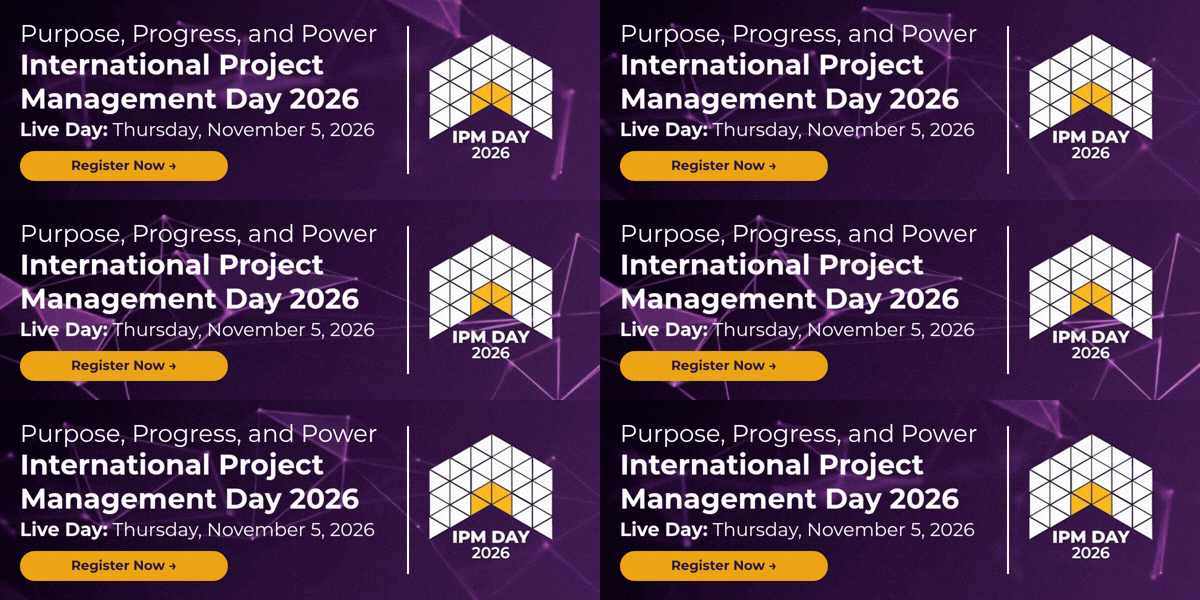
Dr. Elissa Farrow, Ph.D.
Dr. Elissa Farrow is a futurist, author, facilitator, coach, and strategist. She has over 25 years of experience in research, organisational innovation, design, adaptation, and benefit realisation.
Dr. Farrow is known for her compassionate leadership and engagement approach. She is an experienced leader and has been a partner in transformation in various industries. Dr Farrow is a published author, and her doctoral research explored the implications of Artificial Intelligence on organizational futures. Her research created innovative adaptation principles for leaders and delivery teams as well as new knowledge relating to how to best transform organisations’ operating models to anticipate and create positive futures. In 2023, Dr. Farrow became an Adjunct Fellow at the University of the Sunshine Coast.
Lori Milhaven
Executive Vice President at International Institute for Learning (IIL)
Our deepest purpose is to enable growth and success of individuals, teams and organizations with long-lasting, high quality learning in a technology-driven world. Lori is honored to have been with IIL over 30 years, and to make it her mission to focus on continuous improvement, client driven success and to go above and beyond to meet expectations.